
When the residents of the Southern Islands were resettled in the late 1970s, some believed that people still lived secretly on one of the islands.
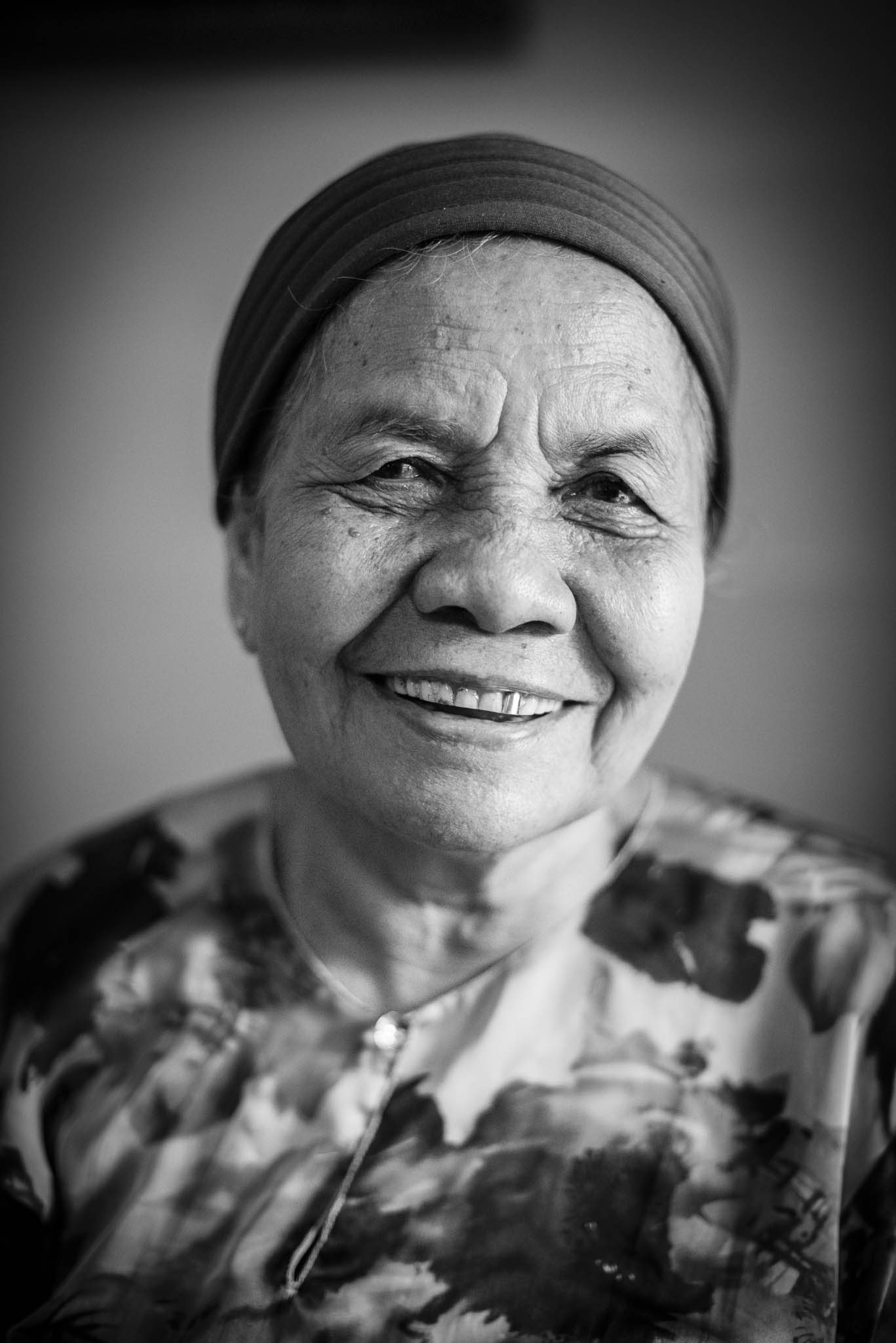
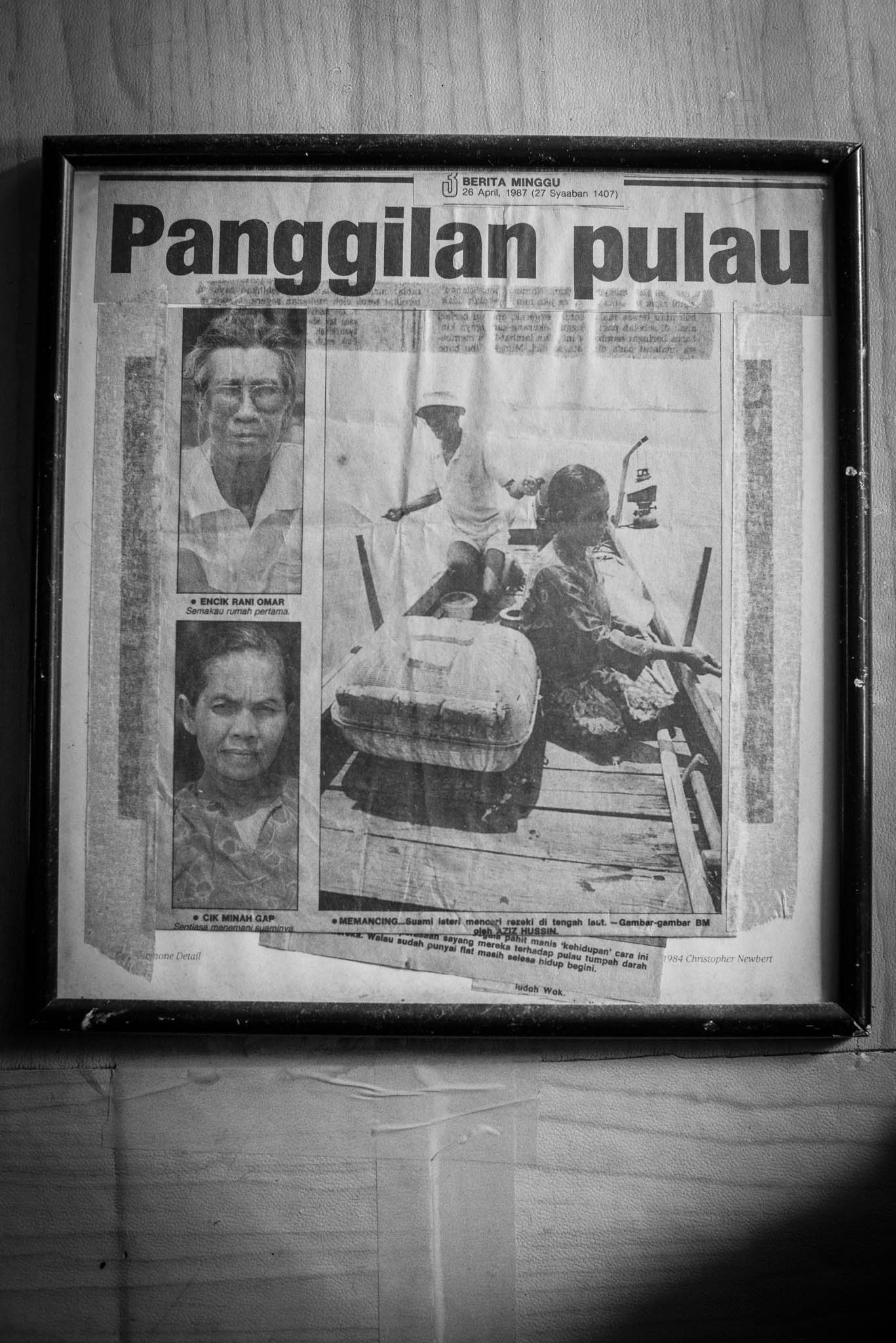
Based on newspaper reports, Minah Bte Gap and her late husband, Rani Bin Omar was one couple that did – on Pulau Semakau where they had lived for decades. That was in 1991. Today, she is 90.
Then, they lived at a beat-up hut by the beach that was used by workers from the environment ministry. There, they took shelter from the elements. The hut had some towels and clothes, a few kerosene lamps and a folding chair.
Though they had a one-room rental flat at Telok Blangah when they resettled in 1977, Daud rarely returned. He worked for the environment ministry on Pulau Semakau and also odd jobs with the Port of Singapore Authority (PSA). For $10, he helped to break down boats – sometimes by burning – that were damaged or worn out.

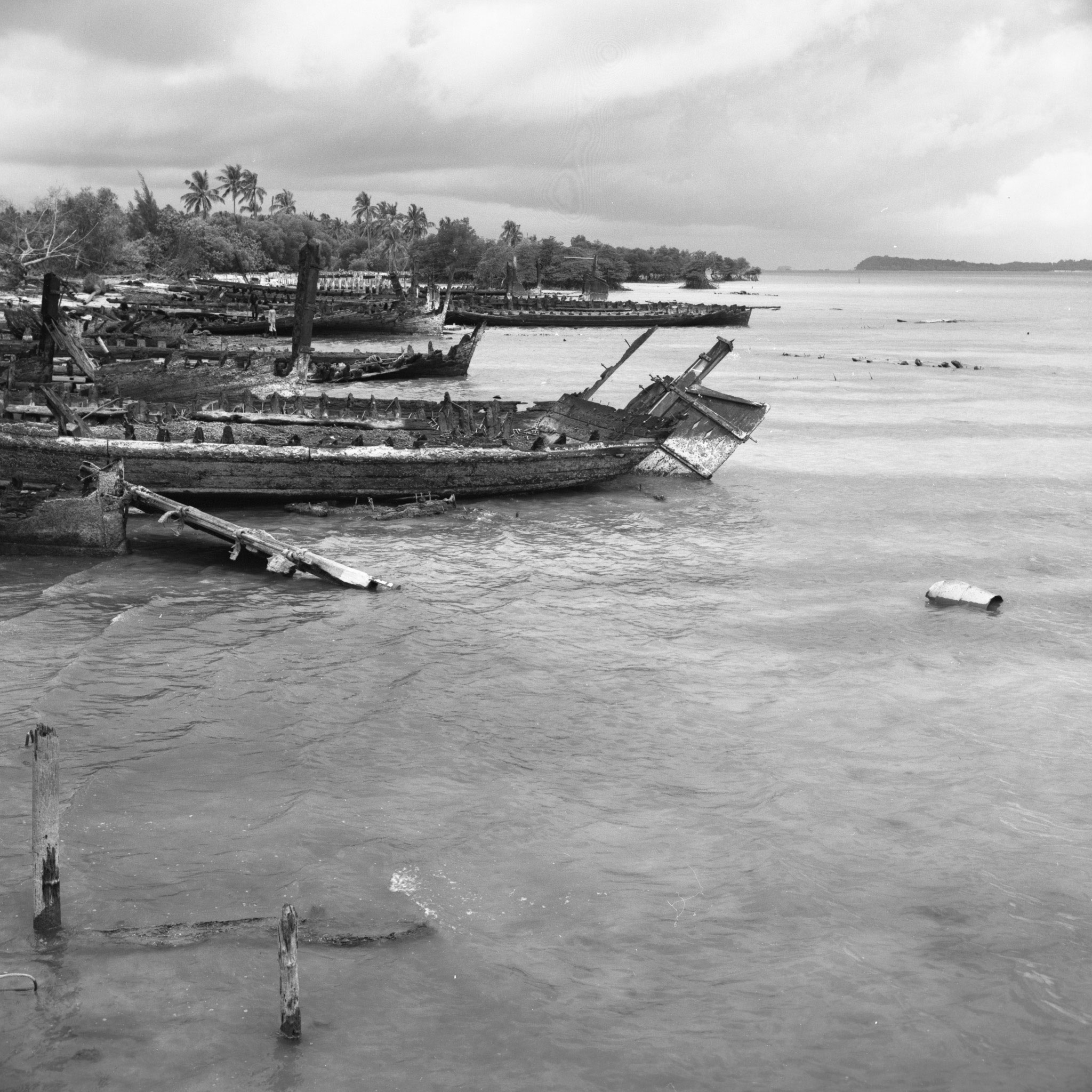
Workers inspecting boats and tongkangs – believed to be from the Singapore River – after burning on the shores of Pulau Semakau. Photo: Geoffrey Benjamin, 1982
Our hearts are attached to the island. We can’t do the same things on Singapore, no?
Minah Bte Gap, former Pulau Semakau islander
In 1989, Minah joined him on the island permanently. On good days, they would sell their catch to Pulau Seking islanders. Sometimes, they would swim and also prepare simple meals such as fish and rice on a kerosene stove.
She said: “Our hearts are attached to the island. We can’t do the same things on Singapore, no?”
Though they were alone and it was relatively safe, there was one incident she remembered. Once, four Indonesian men came to the island with parangs demanding that they hand over their boat engine to them. She said: “If we don’t fight back, we die. If we fight back, we die too.”
“Better to fight.”
If we don’t fight back, we die. If we fight back, we die too. Better to fight.
Minah Bte Gap, former Pulau Semakau islander
She took one oar and her husband took another as they prepared to defend themselves. Somehow, to her disbelief, they decided to leave.
Today, she lives at her Telok Blangah flat. Her husband has passed away for several years. It is not clear when they left the island for good.
Her son, Daud Bin Rani, 63, knows his parents too well – and their deep attachment for the island and the sea. It was difficult, he adds, persuading them to leave Pulau Semakau.
“Jiwa Laut,” the former islander said in Malay which meant their hearts were out at the open sea. They were never apart and headed out together often as husband and wife.
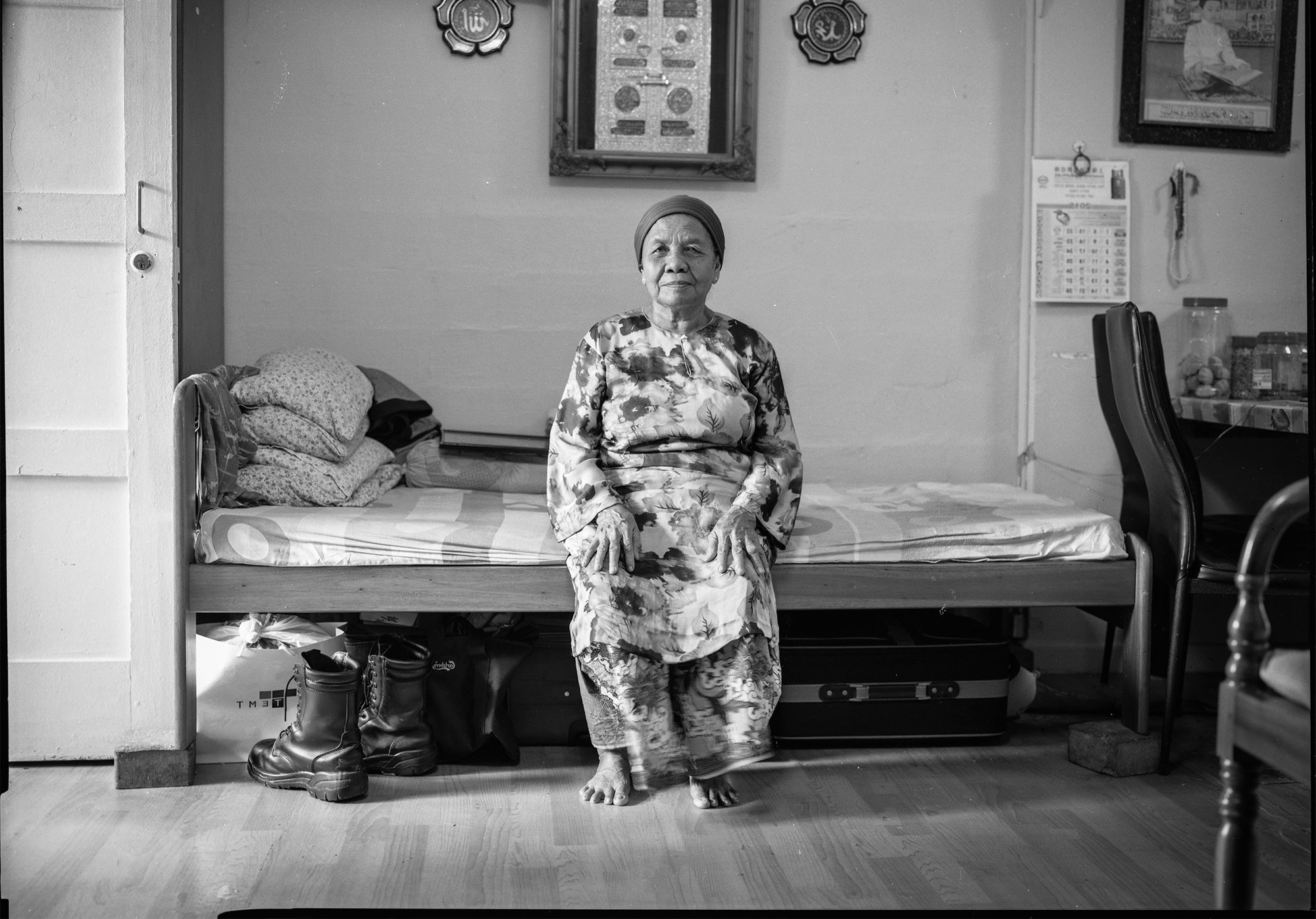
Former Pulau Semakau islander Minah Bte Gap sits in the living room of her one-room flat in Telok Blangah. She has been living at the same flat since being resettled in 1977 – and now lives with her grandchildren.
It was 1963 and a young Daud remembers that Singapore prepared itself for the general elections – for what was then the Legislative Assembly of Singapore.
On Pulau Semakau, together with his father, islanders heralded the arrival of then Prime Minister Lee Kuan Yew visiting his island, on a boat with his supporters. “The islanders gladly carried him on their shoulders,” he said, “because there was no jetty back then.”
The adulation from the islanders, mainly fishermen, was evident as they wanted to keep Lee dry and allowed him to walk only when they reached the shore he said.
It wasn’t just Pulau Semakau. The fate of 5,236 voters hang in the balance for the then Southern Islands constituency, known as an UMNO (United Malays National Organisation) stronghold then.
On polling day, it was a nervous wait for Daud’s late father as he never let the small transistor radio out of his sight, eagerly waiting for the results.
“When the People’s Action Party (PAP) won, he jumped around like a crazy man,” Daud said with a laugh.
Like his father, most of the islanders were hopeful for change based on the promises the PAP team made during the election campaign he said. Such changes included amenities such as a police post, community clinic and a Malay school. “So whatever they promised, they delivered,” he said.



The islanders gladly carried him (Lee Kuan Yew) on their shoulders, because there was no jetty back then.
Daud Bin Rani, former Pulau Semakau islander
And it wasn’t just politics. Life on the island for Daud was special to him. Like many others on Semakau, he went to Pulau Semakau Malay school in the late 1950s.
When it was time for secondary education, they had to take an entrance exam at Kampung Jaguh Malay school. There he would meet other islanders from Pulau Sudong, Seking, Merlimau and Seraya.
Though he managed to enter Yusuf Ishak Secondary School, he never progressed further than Secondary Two. Then, it was not that difficult to find jobs with that level of education. “I did not expect Singapore to change that rapidly,” he said. He has been painting buildings for a living for over three decades.
He recalls the way of life for fishermen on the island. Some months, they would head out to sea using nets and other months they would use fish-traps or fishing rods. “That way our livelihood is continuous and does not stop,” he said.
At the same time, he mentions about the beautiful corals with a sense of regret, now ruined from severe land reclamation on their islands. If untouched, it could have been a tourist destination just for Singaporeans he adds.
The island was barely occupied with no concrete plans of development from the mid-1970s till the early 1990s based on newspaper reports. Daud and his family were resettled from Pulau Semakau in 1974.
If untouched, it could have been a tourist destination just for Singaporeans.
Daud Bin Rani, former Pulau Semakau islander
Cover photo courtesy of Geoffrey Benjamin.